What is cardiorespiratory physiotherapy?
Cardiorespiratory physiotherapy is physiotherapy for the lungs, the heart’s ability to keep up with activity, and your stamina. Kinesio Rehab Ipoh brings it to your home in Ipoh. A physiotherapist teaches you to breathe with less effort, clear phlegm and build your strength back.
You may also hear it called chest physio, chest physiotherapy or cardiopulmonary physiotherapy. It works alongside your doctor’s care, medicines and any oxygen, and does not replace them.
Who does it help most?
It helps people whose breathing or stamina has dropped after illness, surgery or a long time in bed. It also helps those living with a long-term chest condition.
Perak has the highest share of residents aged 65 and over of any Malaysian state [1]. Breathlessness in an older parent is a daily worry for families in Ipoh.
An adult child in KL or Singapore can message us, describe the situation and agree a plan without travelling up.
Which conditions do we help with?
We help with these, and each has its own page:
- Long-term lung disease such as chronic obstructive pulmonary disease (COPD).
- Recovery after heart surgery.
- Weakness and breathlessness after an intensive care unit (ICU) stay.
- Lingering tiredness and breathlessness from long COVID (coronavirus disease).
- Slow recovery after pneumonia or a long hospital stay.
- Phlegm that builds up in people who spend most of the day in bed.
If you are unsure where your problem fits, describe it. We will tell you if a doctor should see you first.
What techniques does the physiotherapist use?
We choose from a small set of methods and teach each one until you or your helper can do it alone. These are the main ones:
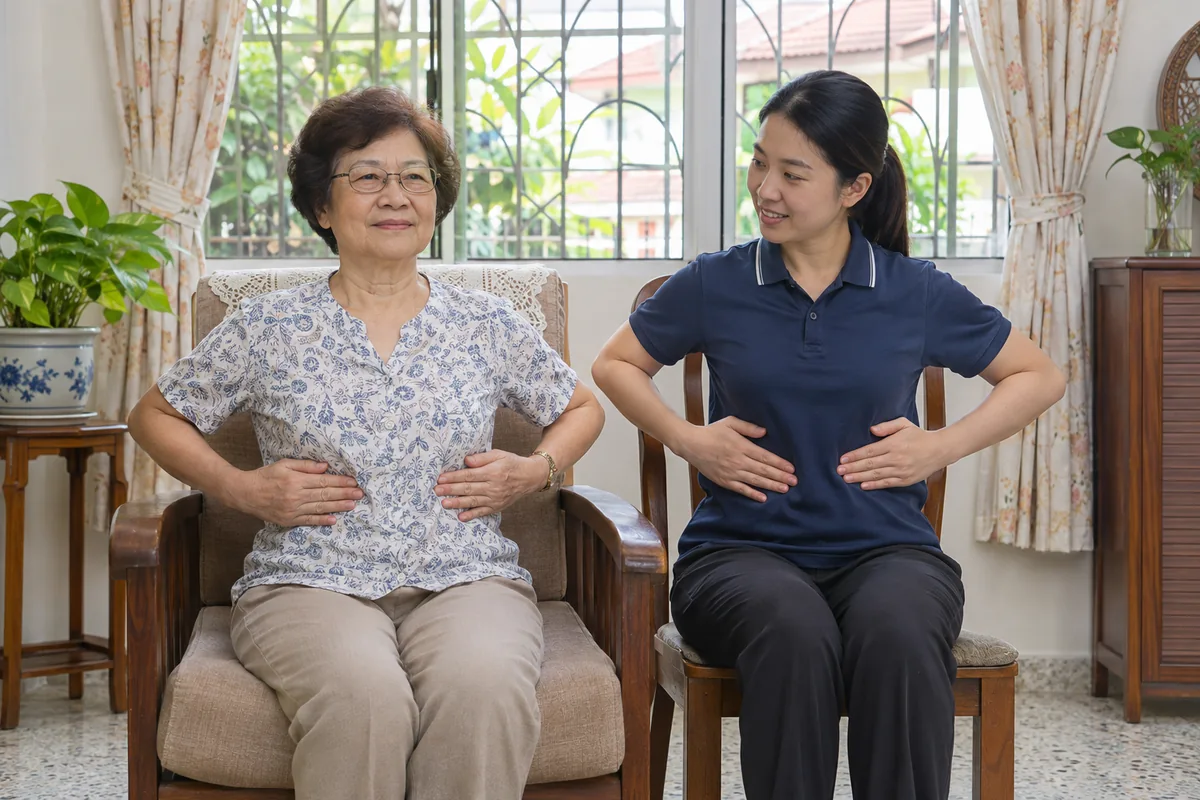
- Breathing control teaches slow, relaxed breaths through the lower chest, so each breath uses less effort.
- Pursed-lip breathing means breathing out slowly through gently closed lips, which keeps the airways open longer and eases breathlessness.
- Active cycle of breathing technique combines deep breaths, relaxed breaths and gentle huffs to move phlegm up from the chest.
- Positioning uses supported sitting or leaning forward to ease breathlessness and let the lungs expand.
- Supported coughing uses a pillow or hands to hold the chest or wound, so a cough is stronger and less painful after surgery.
- Chest wall and posture exercises loosen the tight muscles and ribs that you breathe with.
- Graded walking and strength exercise raises how much you can do before getting breathless. Pacing shows you how to plan the day around your breath.
Medicines such as inhalers, and any oxygen, remain your doctor’s decision. We can check that you use your inhaler well and tell your doctor if the technique needs attention.
How do we rebuild stamina safely?
We start where you are today, perhaps sitting exercises and a short walk indoors. Then we raise the load slowly. We watch your breathing rate, your colour and how you feel, and we agree a level of breathlessness that is comfortable to work at.
Rebuilding matters because inactivity feeds on itself.
The 2023 National Health and Morbidity Survey found 43.2% of older Malaysians were physically inactive [2]. A chest illness can push a quiet life towards a still one. For wider fitness goals, see our exercise rehabilitation and older adult rehabilitation pages.
What does the first session look like?
A first home visit is built around your own rooms, chair, bed and stairs. Here is how it usually runs:
- You message us on WhatsApp with the diagnosis, the hospital, current medicines and what is hardest now.
- We reply with how the first visit would run and a quote.
- The physiotherapist reads your discharge papers and listens to your story.
- We watch how you breathe at rest and when you move, check your posture and rib movement, and see how you manage walking and stairs.
- We teach one or two techniques you can start the same day.
- You leave with a plan for the week, written in plain words for you and your family.
Our page on home physiotherapy explains how visits work across Ipoh.
What can you do this week?
Pick one calm time of day and practise slow breathing for a few minutes, sitting well supported. Keep a fan nearby, sip water if your throat is dry, and exercise in the cooler hours, because Ipoh is warm and humid.
On hazy days, stay indoors when the air is poor, keep windows closed and follow your doctor’s advice. Write down what makes you breathless, what colour your phlegm is and how you sleep, and send it to us.
Home visit or our Canning Garden centre?
Home visits across Ipoh are available now. Our Canning Garden centre, opening soon, will suit people who can travel and want a gym setting.
| Home visit | Canning Garden centre | |
|---|---|---|
| Status | Available now | Opening soon |
| Best for | Breathless on stairs, tired after hospital, bedridden | Able to travel, ready for gym-based exercise |
| Setting | Your own chair, bed and stairs | Gym equipment and space |
Prices differ between home and centre, and we send a quote after your description.
When is another route better?
Go to the emergency department for severe breathlessness at rest, blue lips, chest pain, coughing up blood, fainting, or a fever with fast, laboured breathing. Do not wait for the next physiotherapy visit.
See your doctor soon if the cough changes, phlegm turns thick, green or bloody, your ankles swell, or your breathing suddenly worsens. For a patient who is mostly in bed, see our bedridden patient physiotherapy page as well.