
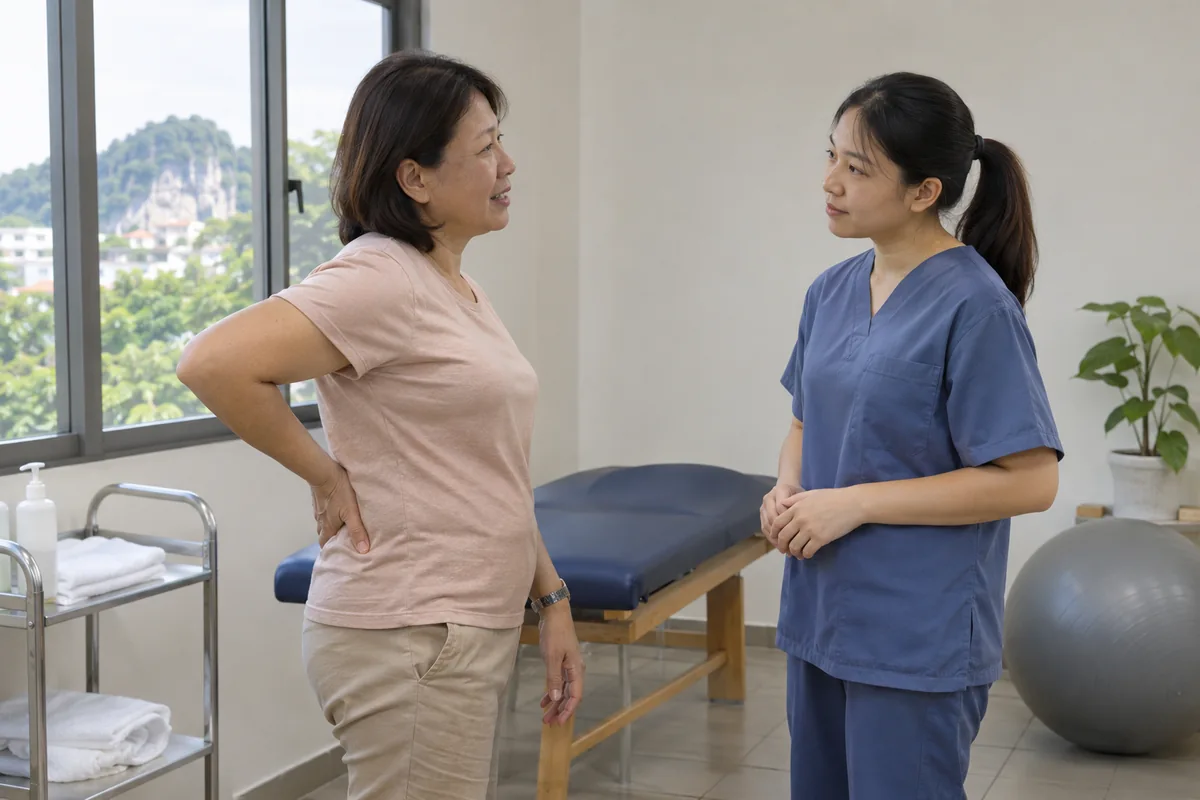
How is a plan for long-term pain different from treating a new injury?
A new injury heals and the plan aims at repair. Pain that has lasted months needs a different plan, built around how your body and your day work together.
A physiotherapist comes to your home, listens to the whole story and starts practical work in the same visit. Our pain management physiotherapy page explains the method, and this page shows how it fits a Gunung Rapat household.
How do I describe pain that has lasted for months?
Tell us what the pain does to your week. This is more useful than a single score.
- Which hours of the day are worst.
- What you have stopped doing because of it.
- What makes it better, even a little.
- What your doctor or clinic has already tried.
If you keep a note for a week, bring it. A photo of your medicine list also helps.
What is pacing, and how does it work on a busy family day?
Pacing means doing a little less than your pain limit, resting early and building up slowly. It breaks the cycle of a good day followed by a crash.
On a family day, we split the tasks into blocks.
- Prepare food for a short block, with a stool to sit on.
- Rest for a few minutes, before the pain forces it.
- Return to a lighter task, such as laying the table.
- Leave the heavy lifting for someone else or for another time.
We agree your own numbers and raise them slowly. The plan stays flexible.
What should I do on a flare-up day?
A flare-up is a bad patch, not proof that you are damaging yourself. We make a short flare-up card with you.
- Keep moving gently, with shorter walks rather than none.
- Use heat or a change of position if they help you.
- Keep to your usual medicine as your doctor advised.
- Return to your plan within a day or two.
Call the doctor for fever, new weakness, loss of bladder control or pain that is different from your usual pain.
How do we cover sleep and the fear of moving?
Pain and poor sleep feed each other. We look at how you lie, what you do in the hour before bed and what goes through your mind when you wake.
Fear of moving is common after a long period of pain. We rebuild confidence with small movements you can finish easily, then add more. Our guide to persistent pain and the page on joint stiffness explain the science in plain words.
How do I help my family understand?
Ask relatives to join the first visit. We explain the plan with them present, and you can ask for one card with the same message for everyone.
If the pain began in a specific joint, our musculoskeletal physiotherapy page for Gunung Rapat covers the first-message checklist. The Gunung Rapat area page gives the neighbourhood overview.